Journey Builder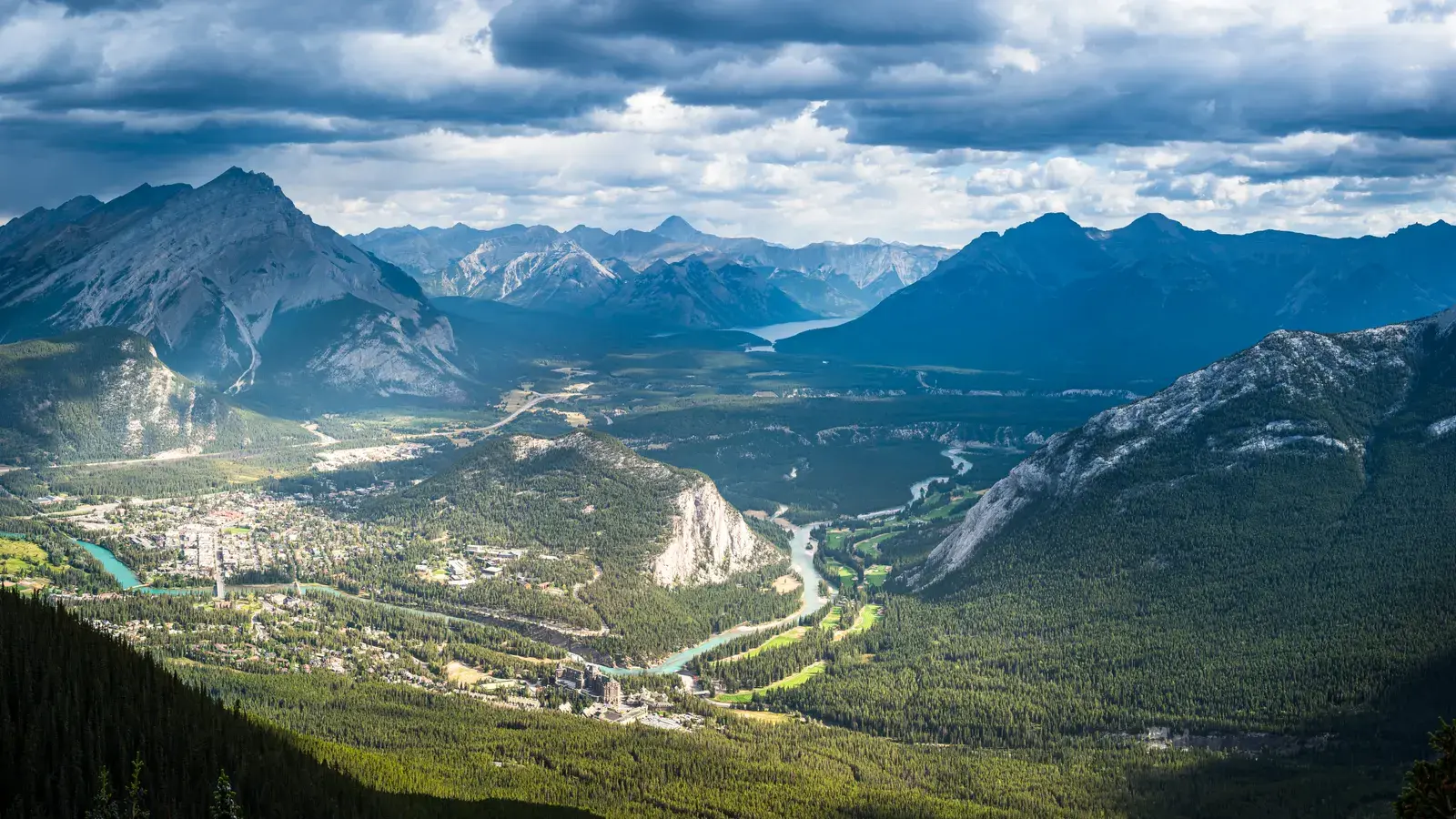
Quick answer
A solid Banff itinerary starts in town for hot springs and viewpoints, moves outward to Johnston Canyon and the Bow Valley on day two, then climbs for high-altitude views before deciding whether to extend north along the Icefields Parkway. Three days covers the essentials; five to seven lets you add that drive toward Jasper without rushing.
Why Banff rewards a slower pace
Banff sits inside Canada’s oldest national park, and it shows the moment you arrive: glacier-fed lakes in impossible shades of turquoise, peaks that seem to lean over the town itself, and wildlife that treats the roadside like its own backyard. A town of under eight thousand people somehow anchors one of the most dramatic landscapes on the continent, which is why most visitors plan anywhere from three days to a full week here. Any shorter and you’re just passing through; any longer and you’ll start noticing the same elk by name.
Day one: finding your footing in town
Give yourself the first day to acclimatize, both to the altitude and to the pace of the place. Banff sits higher than most visitors expect, and a gentle opening day pays off later when you’re tackling longer hikes or drives.
Starting at the springs that built the town
Banff exists because of its hot springs, so it makes sense to begin there. Cave & Basin National Historic Site tells the origin story of the whole park system, and it’s an easy, low-effort way to spend a morning while your legs adjust to the elevation. Later, the Banff Upper Hot Springs offer the payoff version of that history: a soak with mountain views, best enjoyed in late afternoon when the light softens over the surrounding peaks. In between, a walk along the Bow River through town is an easy way to stretch your legs without committing to a full trail, and it connects naturally to Surprise Corner and Bow Falls, two short stops that punch well above their effort level. The falls are modest by Rockies standards, but the framing against the Fairmont Banff Springs hotel and the valley behind it is the kind of view that ends up in every visitor’s photo roll. If you have energy left, the Cascade Garden above town offers a quiet, formal counterpoint to the wilder scenery you’ve just seen, with Cascade Mountain filling the background.
Day two: canyons and water
With your legs under you, day two is built around Johnston Canyon, one of the signature walks in the park. The trail follows a narrow gorge past a series of waterfalls, and it’s popular enough that an early start matters more here than almost anywhere else on this itinerary. Arriving before mid-morning means fewer people on the catwalks and better light for photos. Because the canyon sits a drive from town rather than in it, this is a good day to think about pacing: how long you linger at each waterfall, how much buffer you leave for the drive back, and whether you want to treat it as a half-day or build a fuller loop around it. That kind of pacing question comes up constantly on road trips, and it’s worth getting familiar with simple frameworks like the 3-3-3 rule if you’re also driving in or out of Banff rather than flying.
Day three: altitude and views
By day three, most visitors are ready to go up rather than out. The Mt Norquay Sightseeing Chairlift delivers a big payoff for very little physical effort, lifting you above the treeline for sweeping views back over the Bow Valley and the town you’ve been exploring on foot. It’s a good counterweight to the canyon walking from the day before, and a nice one to schedule for whenever the weather forecast looks clearest, since the view is the entire point. If you’ve got energy left in the afternoon, this is also a natural time to return to anything you skipped on day one, whether that’s a second pass through the Cascade Garden or a slower soak at the hot springs now that you’ve earned it.
Extending north: the Icefields Parkway
If your trip stretches past three days, the single best use of extra time is the Icefields Parkway, the road connecting Banff to Jasper. It’s often described as one of the great drives anywhere, and that reputation holds up: an unbroken run of glaciers, waterfalls, and towering summits with almost no development in between. This isn’t a detour you squeeze in on a half-day; it deserves its own dedicated stretch of the trip, with stops built in rather than rushed past. Travelers planning this as part of a longer loop often find it easier to think of Banff as one stop within a larger road trip rather than a fixed destination, which is where a broader look at road trip planning can help frame the whole route.
Tip
Arrive at Johnston Canyon before mid-morning for fewer crowds and better light.
Good to know
Banff sits at a noticeably higher altitude than many visitors expect, so a gentle first day helps.
Heads-up
Shoulder-season snow can affect both the Icefields Parkway and chairlift operations.
Timing it by season
Summer brings the most reliable weather and the fullest trails, especially around Johnston Canyon and the chairlift, so early starts matter more then. Shoulder seasons thin the crowds but can bring snow at higher elevations, which affects both the Icefields Parkway and the chairlift’s operating conditions. Whatever season you visit, building in a flexible day or two gives you room to shift plans around weather rather than fighting it.
Putting the days together
Turning a list of stops like this into an actual day-by-day plan is where things get tedious fast, since every addition changes drive times, meal windows, and how much daylight you have left for a hike. That’s the gap Journey Builder was built to close: it builds the Banff route for you, ranks nearby stops like Johnston Canyon or a run up the Icefields Parkway by how much detour they add, and then auto-schedules your picks around sunrise, sunset, and your own pace. If you’re weighing it against other planning tools, our breakdown of AI travel planning options is a useful starting point, and our piece on turning an idea into a real itinerary digs deeper into the road trip planning process itself. When you’re ready to turn this Banff itinerary into day-by-day reality, start at journeybuilder.app.
Top things to do in Banff
Cave & Basin National Historic Site
- landmark
Johnston canyon
- landmark
Banff Upper Hot Springs
- landmark
Surprise Corner
- viewpoint
Bow Falls
- outdoor
Mt Norquay Sightseeing Chairlift
- landmark
Bow River
- outdoor
Cascade garden
- outdoor
Bear Street Mall
- shopping
Ink Pots
- landmark
Places to eat in Banff: some options
Anejo Restaurant
- mexican
Block Kitchen + Bar
- international, tapas
Brazen
- regional
Pacini
- italian
The Bear Street Tavern
- pizza
This tavern is popular for its vibrant atmosphere and delicious comfort food, including pizza and local brews.
- Hours
- 11:30-21:00
- Phone
- +1-403-762-2021
- Address
- 211 Bear Street, T1L 1A1
Some options, in no particular order.
Places to stay in Banff: some options
Buffalo Mountain Lodge
- hotel
Douglas Fir Resort & Chalets
- hotel
Johnston Canyon Campground
- camp site
Mount Royal Hotel
- hotel
Rimrock Resort
- hotel
Some options, in no particular order.
Frequently asked questions
How many days do I need for a Banff itinerary?
Three days covers the core town sights, canyons, and a high viewpoint. Five to seven days lets you add the Icefields Parkway without rushing.
What’s the best order to see Banff’s main sights?
Starting in town with the hot springs and viewpoints, then moving to Johnston Canyon, then finishing with a high-altitude view like Mt Norquay lets you build up gradually rather than front-loading the most demanding day.
Is the Icefields Parkway worth adding to a Banff trip?
Yes, if you have the extra days. It’s considered one of the great scenic drives, but it deserves its own dedicated time rather than being squeezed into a single afternoon.
When should I visit Johnston Canyon?
Early morning, ideally before mid-morning, since the trail gets busy and the light is better for photos earlier in the day.
Ready to start? Sign up with Journey Builder.
Plan your next road trip with Journey Builder
It works out the route, finds the stops worth making and lays out every day. Pre-register and we'll email you as soon as your account is ready.