Journey Builder
How-to guide
Seattle to Banff Canada: Your Complete Road Trip Guide
Planning a Seattle to Banff Canada trip? Get the route, border crossing tips, best stops, and how many days you'll need for the drive.
Plan your trip
Journey Builder works out the route, finds the stops worth making and lays out every day.
Pre-registerSee how it worksA Seattle to Banff Canada road trip strings together misty Pacific coastline, Fraser Valley farmland, and some of the most dramatic peaks on the continent, all in a single week or less. Along the way, you’ll pass through small border towns, cross into another country, and watch the landscape shift from rainforest to mountain pass. Whether this is a quick long-weekend dash or the opening leg of a longer Western Canada loop, a little route planning up front turns a drive into a trip worth remembering.
Quick answer
Driving from Seattle to Banff takes most travelers about two full days on the road, covering roughly 550 miles (885 km) one-way through Washington State and British Columbia. The fastest route runs north on I-5 to the Peace Arch border crossing at Blaine, then east on the Trans-Canada Highway through the Fraser Valley and into the Canadian Rockies.
Mapping the Route From Seattle to Banff
Distance, drive time, and road options
From Seattle, the drive to Banff covers about 550 miles and typically takes 9 to 10 hours behind the wheel, not counting stops. Most drivers head north on I-5, cross into Canada, then pick up BC Highway 1 (the Trans-Canada Highway) through Hope and the Coquihalla Highway toward Kamloops before continuing east into the Rockies. If you’d rather hug the Fraser Valley and skip the mountain pass, you can also route through Merritt and connect further east; either way, the road itself is well maintained and scenic in both directions.
Crossing the border at Blaine
The main crossing point is the Peace Arch at Blaine, a short detour north of Bellingham. Bring a passport or enhanced driver’s license for everyone in the car, and expect wait times that can swing from a few minutes to over an hour depending on the day and season. Weekday mornings tend to move faster than weekend afternoons.
Good Stops Between Seattle and Banff
Everett and the Puget Sound towns
Just north of Seattle, Everett makes an easy first stop, with waterfront trails overlooking the Olympic Mountains and the Future of Flight Aviation Center for anyone curious about Boeing’s operations. It’s a working port city with its own maritime character, and a good spot to stretch your legs before the longer stretch of highway ahead.
Mount Vernon, Bellingham, and Blaine
Continuing north, I-5 rolls through Mount Vernon, Bellingham, and finally Blaine, right at the border. Each town offers a natural break point for gas, food, or an overnight stay if you’d rather split the first leg into a shorter driving day.
Abbotsford and the Fraser Valley
Once you’re across the border, Abbotsford is the first notable stop in British Columbia, sitting in the heart of the Fraser Valley. From here, the highway starts climbing toward the mountains, and the scenery shifts quickly from farmland to forest and peaks.
Heads-up
Border wait times at Blaine can range from a few minutes to over an hour, so build in buffer time.
How Many Days to Budget
A fast two-day drive
If Banff is the whole point of the trip, two days gets you there comfortably: one night somewhere around the border or in the Fraser Valley, then a second push through the mountains to arrive in Banff by evening.
A slower week along the way
Many travelers prefer to stretch the drive into a longer loop, especially if Vancouver or Jasper are also on the list. Our guide to a Vancouver Banff road trip breaks down that leg in detail, and if you plan to keep driving north once you arrive, our Banff Jasper itinerary covers the next stretch of Rockies highway.
Things to Do in Seattle Before You Hit the Road
Top sights worth a morning or two
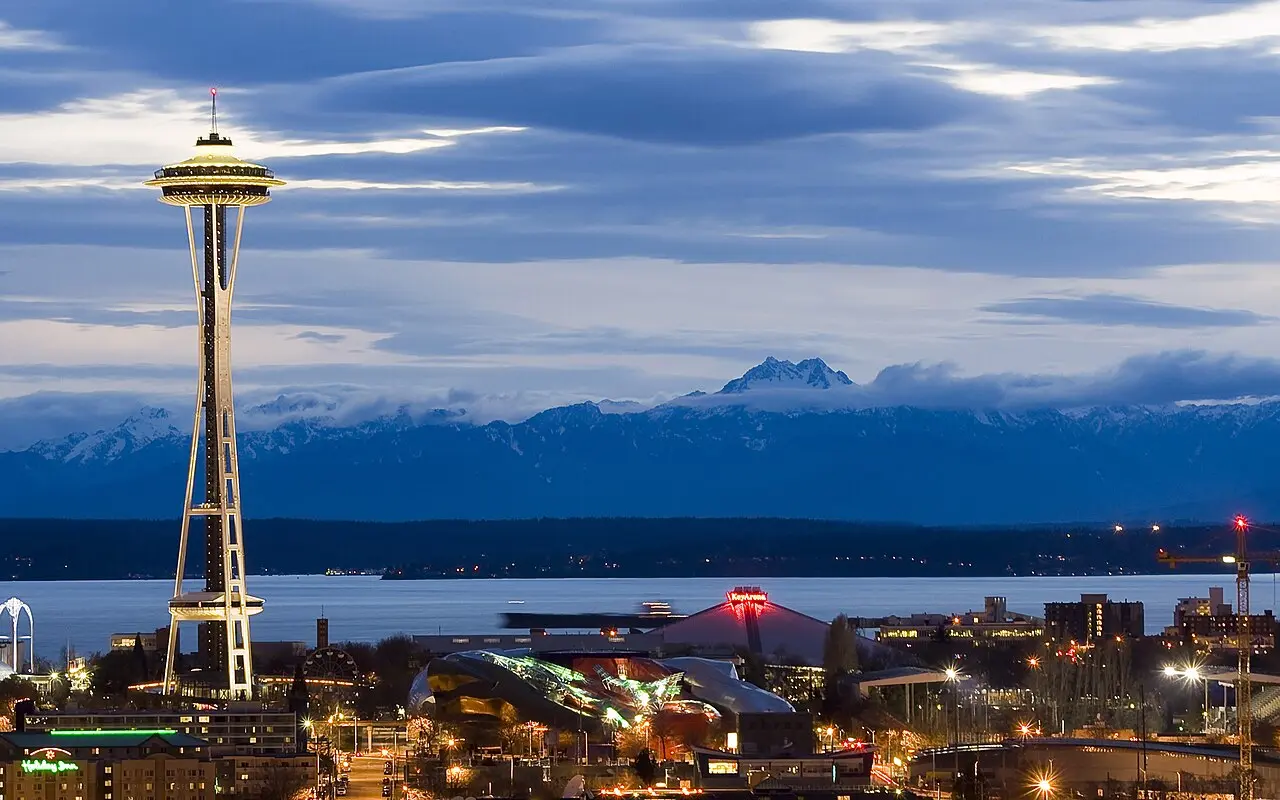
Before you leave, it’s worth carving out time for Seattle itself. Pike Place Market is the classic start, followed by the Space Needle and Chihuly Garden and Glass nearby. History buffs tend to gravitate toward Pioneer Square, while the waterfront’s Seattle Great Wheel offers a quick, scenic break between packing and departure. For a fuller sense of the city as a jumping-off point, see our guide to Seattle as a road trip gateway.
Good to know
Journey Builder can plan road trips anywhere in the United States and Canada, from 1 to 90 days.
Weather, Seasons, and Timing
Seattle sees its lowest rain chances in summer, dropping to around 0.1% in July, compared to roughly 0.6% in the depths of winter. Conditions along the route into Canada follow a similar pattern, so a June through September window generally offers the driest, clearest driving and the best mountain visibility once you reach Banff.
Planning the Logistics
Stitching together border crossing timing, Seattle attraction hours, and overnight stops in British Columbia takes real research, and it’s easy to lose an evening to tabs and spreadsheets. This is where a tool like Journey Builder fits naturally into the planning: it builds the route automatically with distance and drive time for every leg, ranks towns along the way so you know whether a stop is worth a detour, and finds things to do, places to eat and places to stay at each one. Lock in your Banff arrival, and the auto-scheduler arranges the rest of the trip around it, respecting opening hours and daylight as it goes. You can start mapping a road trip in minutes, whether Banff is the destination or just one stop on a longer journey.
Ready to turn this route into an actual day-by-day plan? Pre-register with Journey Builder and be among the first to try it when it launches.
Plan your next road trip with Journey Builder
It works out the route, finds the stops worth making and lays out every day. Pre-register and we'll email you as soon as your account is ready.