 Journey Builder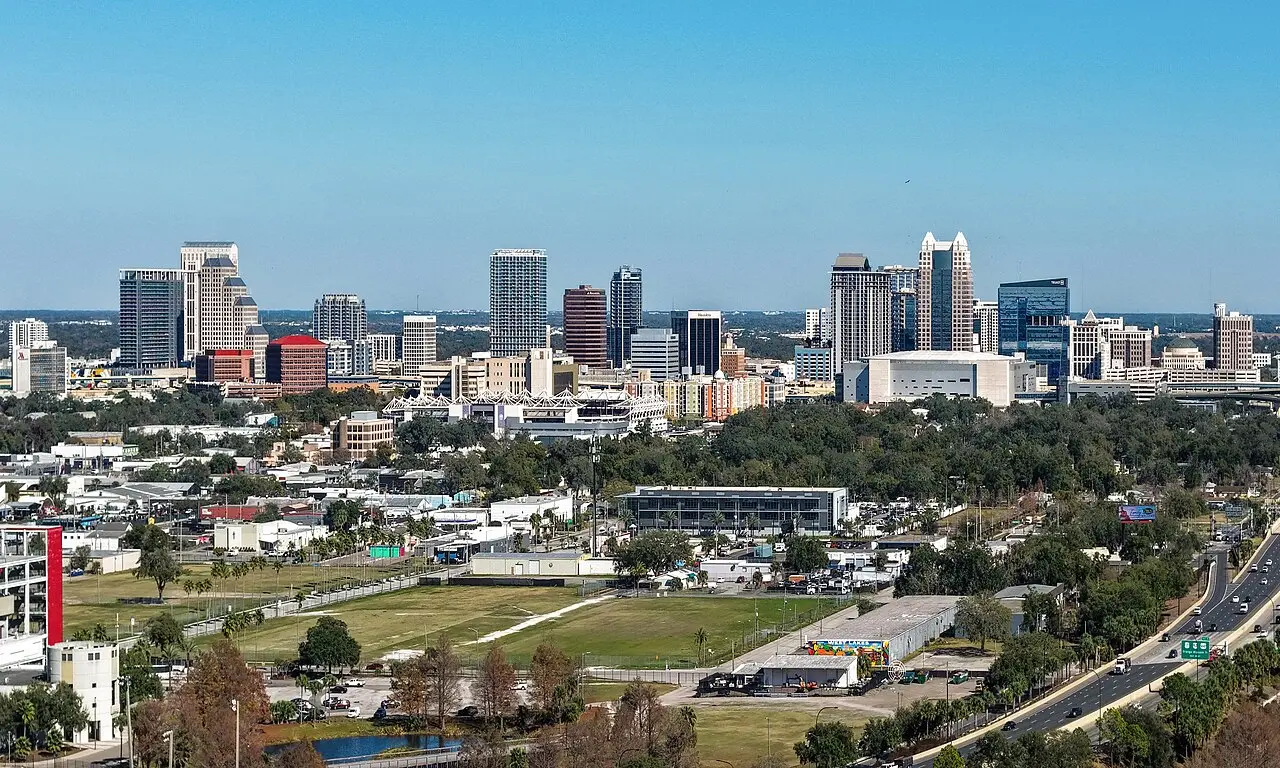
Road Trip from Miami to Orlando: Route, Stops, and Timing
Photo: Quintin Soloviev, CC BY 4.0, via Wikimedia Commons

Plan a road trip from Miami to Orlando: the fastest route, drive time, stops in Fort Lauderdale and Fort Pierce, and what to do at each end.
A road trip from Miami to Orlando covers about 419 km (260 mi) on the fastest route, roughly 4 hours 15 minutes of driving without stops. That makes it one of Florida’s most manageable long weekend drives — short enough to do in a single push, long enough to justify a stop or two along the way, and bookended by two of the state’s biggest draws: Miami’s beaches and culture on one end, Orlando’s theme parks on the other.
The drive, leg by leg
| Leg | Distance | Drive time |
|---|---|---|
| Miami to Fort Lauderdale | 28 mi / 45 km | 30 min |
| Fort Lauderdale to Jupiter | 64 mi / 104 km | 1 h 5 min |
| Jupiter to Fort Pierce | 48 mi / 77 km | 50 min |
| Fort Pierce to Orlando | 120 mi / 194 km | 1 h 50 min |
| Total | 260 mi / 420 km | 4 h 15 min |
Drive times without stops or traffic, to the nearest 5 minutes. Routing by Geoapify · map data © OpenStreetMap contributors.
The Fastest Route
The most direct way north runs along Florida’s east coast corridor, mostly on I-95 and the Florida Turnpike, in four legs:
- Miami to Fort Lauderdale: 45 km / 28 mi, about 30 minutes
- Fort Lauderdale to Jupiter: 104 km / 64 mi, about 1 hour 5 minutes
- Jupiter to Fort Pierce: 77 km / 48 mi, about 50 minutes
- Fort Pierce to Orlando: 194 km / 120 mi, about 1 hour 50 minutes
None of these legs are long enough to require a strict rest stop, but stringing them together makes for a natural set of breaks if you’d rather split the drive into shorter chunks than do it in one sitting.
Is There a Slower, Prettier Alternative?
If you’re picturing a scenic backroads version of this drive, temper your expectations. A route that avoids highways covers about 414 km / 257 mi — nearly the same distance — but takes about 6 hours 15 minutes, roughly 47% longer than the fastest option. That extra time doesn’t buy much in the way of coastline or charm on this particular corridor, so it’s not a practical alternative to the highway route unless you have a specific reason to take it.
Starting Point: Miami


Miami sets the tone before you even leave the city. It’s a place where Latin culture, Art Deco architecture, and Atlantic waters collide, from the murals of Wynwood to the sand of South Beach, with Cuban and Caribbean food and nightlife layered throughout. With a population of about 442,000, it’s sized for a real stay rather than a quick pass-through, and travelers typically spend 3 to 6 days here covering its foodie, historic and cultural, weekend-getaway, and outdoor-adventure sides. If you have time before you hit the road, popular things to do include Bayside Marketplace, the Miami Children’s Museum, the Calle Ocho Walk of Fame, and the Miami International Mall.
First Stop: Fort Lauderdale
Half an hour up the coast, Fort Lauderdale is built around more than 300 miles of inland waterways — enough to earn it the nickname “Venice of America,” where boats function as taxis and waterfront dining is routine. Beyond its broad Atlantic beach, the city has a legitimately sophisticated arts scene, reef diving offshore, and the restaurant-lined Las Olas Boulevard. With a population around 165,500, it fits well as a short add-on: locals and visitors typically spend 2 to 5 days here, and it shares Miami’s family-friendly, foodie, weekend-getaway, and outdoor-adventure appeal. It’s an easy first stop if you want to break up the drive without adding much distance.
Through Jupiter and Fort Pierce


North of Fort Lauderdale, the route passes through Jupiter, a smaller coastal town, before reaching Fort Pierce, population about 46,100. Fort Pierce is a quieter stopover than the big coastal cities on either end of the trip, with a handful of parks and nature areas worth a stretch-your-legs stop, including Old Fort Park, the George E. Lestrange Natural Area, Becker Preserve, the Manatee Center, and the Saint Lucie County Fair Grounds. It’s roughly the midpoint of the drive by time, which makes it a sensible place to pause if you left Miami later than planned.
Tip
Fort Pierce sits roughly at the midpoint by drive time, making it a sensible break point.
Good to know
Miami and Orlando are close in population size, each easily filling several days on its own.
Arriving in Orlando
Orlando needs little introduction as the theme-park capital of the world — home to Walt Disney World, Universal, and SeaWorld — but it also has a genuinely strong dining scene and a network of lakes and nature trails beyond the parks. With a 2025 population of about 441,600, it’s essentially Miami’s twin in size, and travelers often stay 3 to 7 days here, since families and thrill-seekers alike can fill a week without running out of things to do. Beyond the marquee parks, well-known stops include Universal Studios Florida, Gatorland, SEA LIFE Orlando Aquarium, and the Crayola Experience.
If Orlando isn’t your only Florida stop this trip, it’s worth knowing the drive works the other way too — see this guide to a road trip from Tampa to Orlando if you’re routing through the Gulf Coast as well.
Planning the Logistics
A four-and-a-quarter-hour drive sounds simple until you start layering in stops: when to leave Miami so you’re not fighting traffic, whether Fort Lauderdale or Fort Pierce fits your pace better as a break, and what’s actually open when you plan to arrive at each one. This is where Journey Builder fits — it takes a vague idea like “Miami to Orlando with a stop or two” and turns it into a trip you can actually take. It builds the route automatically with distance and drive time for every leg, ranks the towns along the way and tells you how far off-route each one is, and lets you choose fewer highways or drag a leg onto the road you’d rather drive. Once you’ve picked stops for food, activities, and places to stay, the auto-scheduler assembles a day-by-day plan around your wake-up and bedtime, drive times, and any fixed reservations — and it won’t schedule a stop at a place that’s known to be closed when you’d arrive. For a short, straightforward drive like this one, that’s the difference between a rough plan and logistics that hold up in the real world.
A Few Practical Notes
Since none of the individual legs run much past two hours, this is a good candidate to think about in terms of pace rather than distance. If you’re new to structuring a longer drive, the 3-3-3 rule for road trips is a useful framework for deciding how much driving, and how many stops, feels right for your group. And if you’re building out a bigger Florida loop, this practical plan for road trip season covers the broader groundwork worth doing before you leave.
Some travelers also treat Miami as a jumping-off point in the other direction, toward the Keys — if that’s on your radar too, see the complete guide to driving from Miami to Key West or the route guide for a Miami to Key West road trip.
Ready to Plan Your Own
Whether you’re driving straight through in one push or splitting it across Fort Lauderdale and Fort Pierce, a Miami to Orlando road trip is short enough to plan properly and long enough to reward doing so. Pre-registrations are open now for Journey Builder — sign up here to plan your next road trip right.
Plan your next road trip with Journey Builder
It works out the route, finds the stops worth making and lays out every day. Pre-register and we'll email you as soon as your account is ready.