Journey Builder
How-to guide
Route 66 RV Road Trip: Planning Guide for the Full Drive
Planning a Route 66 RV road trip? Get guidance on timing, campgrounds, RV-friendly stops, and how to structure the drive from Chicago to Santa Monica.
Plan your trip
Journey Builder works out the route, finds the stops worth making and lays out every day.
Sign upSee how it worksIn short
A Route 66 RV road trip typically runs 2,400+ miles from Chicago to Santa Monica, and most RVers plan 2 to 4 weeks to cover it at a comfortable pace. The key is choosing campgrounds with RV hookups along the way, knowing which historic stretches of the old highway can handle a larger rig, and building slack into your schedule for slow driving days and detours to classic roadside stops.
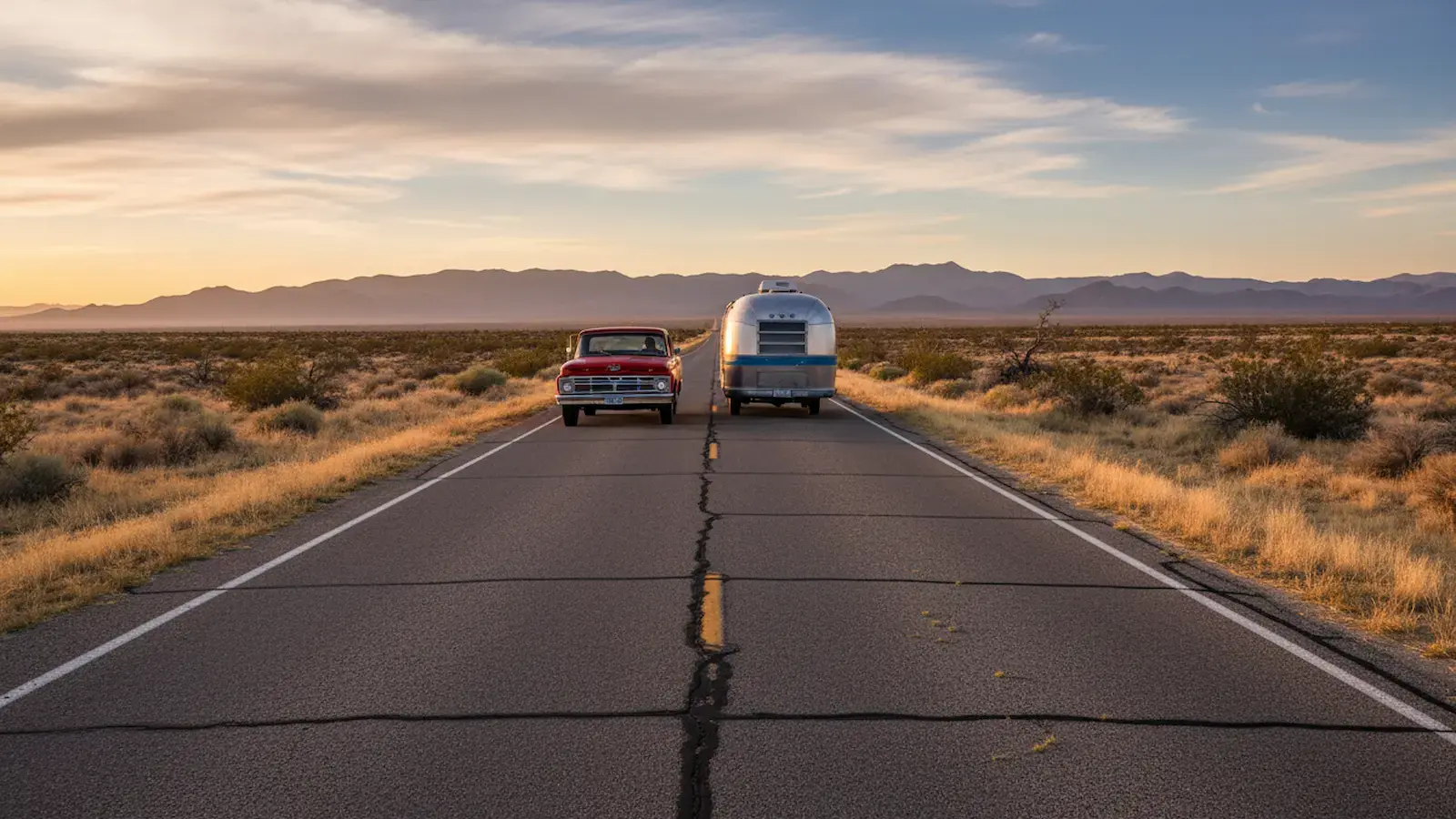
Taking a recreational vehicle down the Mother Road is a different experience than doing it in a sedan. You’re not just picking sights to see; you’re also thinking about campground hookups, rig length limits on narrower old highway segments, and how many hours you actually want to spend behind the wheel of something the size of a small apartment. Route 66 rewards that extra planning, though, because the whole point of the drive is to go slow, pull off for diners and neon signs, and sleep somewhere different almost every night.
Why Route 66 Works So Well in an RV
Part of the appeal of an RV road trip is not having to book a hotel every night, and Route 66 happens to have one of the best-supported networks of campgrounds and RV parks of any classic American drive. The original highway runs through eight states — Illinois, Missouri, Kansas, Oklahoma, Texas, New Mexico, Arizona, and California — and most of that corridor still has small-town RV parks, state parks, and a few national forest campgrounds within a short drive of the historic alignment.
That said, not every mile of old Route 66 is wide and well-maintained. Some sections, especially stretches in Oklahoma and parts of the original alignment through small towns, are narrower two-lane roads. Larger Class A motorhomes or long trailers may want to stick closer to the modern parallel interstates (I-55, I-44, I-40) and detour onto the historic road for shorter stretches rather than driving the entire original path in the rig.
How Long to Plan For
Most travelers budget somewhere between two and four weeks for a full Route 66 RV road trip, though it’s possible to do a shortened version of a single state or region in under a week. The full route from Chicago to Santa Monica is roughly 2,448 miles depending on which historic alignment you follow, and RV travel days tend to run shorter than car travel days — often 150 to 250 miles — to leave time for setup, hookups, and exploring.
Breaking the Drive Into Legs
Rather than treating Route 66 as one long haul, it helps to think of it as a series of regional legs:
- Illinois to Missouri: Chicago, Springfield, and St. Louis, with classic diners and drive-ins along the way.
- Kansas and Oklahoma: A short Kansas clip followed by a long Oklahoma stretch, including Tulsa and Oklahoma City.
- Texas Panhandle: Amarillo and the Cadillac Ranch, a relatively quick crossing.
- New Mexico: Albuquerque and Santa Fe-adjacent detours, with high desert scenery.
- Arizona: Flagstaff, Williams, and the well-preserved stretch through the Mojave toward California.
- California: The final push through the desert into Los Angeles and Santa Monica.
Our state-by-state guide to Route 66 stops breaks down what to see in each of these legs in more detail, and if you’re focused specifically on the California end of the drive, the Route 66 California road trip guide covers stops, timing, and tips for that final stretch.
RV-Specific Planning Considerations
Campground Hookups and Reservations
Popular stretches of Route 66, especially around Flagstaff, Williams, and the Texas Panhandle in summer, can fill up fast. Booking RV sites with full hookups a few weeks ahead during peak season (late spring through early fall) avoids the scramble of arriving somewhere with no space.
Fuel and Driving Range
Larger RVs get noticeably worse fuel economy than a standard vehicle, and some stretches through New Mexico and Arizona have longer gaps between fuel stops. Planning fuel stops in advance, rather than assuming you’ll find a station whenever you need one, matters more in an RV than it does in a car.
Daylight and Pace
Driving an RV after dark, especially on unfamiliar two-lane roads, isn’t something most RVers want to do regularly. Planning each day’s drive so you arrive at your campground well before sunset gives you time to set up, and it also means you’re more likely to catch the parts of the route, like open desert at golden hour, that are part of why people drive Route 66 in the first place.
Where Journey Builder Fits In
Mapping out a trip this long, with RV-specific stops, hookup availability, and realistic drive times, is a lot of manual research if you’re doing it leg by leg in a spreadsheet. Journey Builder turns a Route 66 idea into a day-by-day plan: it builds the route automatically with distance and drive time for every leg, and its RV mode surfaces campgrounds along the way instead of just hotels. You can set your pace and your maximum driving hours per day, and the auto-scheduler plans everything else, meals, activities, check-ins, around that, without booking a stop at a place that’s closed when you’d arrive.
It also handles the kind of detail that’s easy to lose track of on a multi-week trip: a fuel estimate based on your actual vehicle and live fuel prices, a rental car checklist if you’re renting the rig, and a trip budget broken down by day and category. If you’ve already got a reservation at a particular campground or a tour booked partway through, you can lock that in place and let the rest of the schedule build around it.
Other RV-friendly drives across North America follow a similar planning logic. Our guide to the best RV road trips looks at several worth considering, and if you’re weighing options beyond Route 66, the Banff road trip guide covers routing and timing for that mountain drive.
Getting Started
Whether you’re planning two weeks of the full Chicago-to-Santa Monica run or a shorter regional leg, the road trips page is a good starting point for seeing how a route comes together before you commit to dates.
A Route 66 RV road trip rewards planning without needing you to over-plan every single hour. Get the big legs, campgrounds, and fuel stops sorted, leave room for the diners and roadside attractions you didn’t know about yet, and the drive takes care of the rest.
Ready to plan your road trip?
Sign up for Journey BuilderPlan your next road trip with Journey Builder
It works out the route, finds the stops worth making and lays out every day. Sign up and plan your first trip today.